What Are Sports Injuries?
Sports injuries are not a single condition — they are a broad category. Understanding your specific injury type determines the treatment approach.
Sports injuries fall into two broad categories. Acute injuries occur from a specific, identifiable incident — a tackle, a fall, a sudden change of direction, or an awkward landing. These include ligament sprains, muscle or tendon tears, dislocations, and fractures. The moment of injury is clear, and the pain and swelling that follow are immediate.
Overuse injuries develop gradually through repetitive stress on a tissue that accumulates faster than the body can repair it. These include tendinopathy (chronic tendon pain), stress fractures, bursitis, shin splints, and runner's knee. There is no single moment of injury — instead, there is a gradual build-up of pain and loss of performance. These injuries are often misunderstood, undertreated, and left to become chronic problems that keep athletes out of sport indefinitely.
Both types require precise physiotherapy assessment. The key questions are: what structure is injured, how severely, at what stage of healing is it now, and what is the specific rehabilitation pathway to restore full, pain-free function? Returning to sport too early is one of the most common causes of re-injury and longer absence. Our goal is to get you back at full capacity — safely and permanently.
Quick Facts
Common Sports Injuries We Treat
We treat the full range of sports-related injuries — from weekend warriors to competitive athletes.
ACL & Knee Ligament Injuries
Anterior cruciate ligament tears — the most feared sports injury. Structured ACL rehabilitation or post-surgical rehab to restore full knee function and confident return to cutting and pivoting sports.
Ankle Sprains
Lateral ankle ligament sprains — the most common sports injury. Often undertreated, leading to chronic instability. Proper rehabilitation prevents recurrence and restores full proprioception.
Muscle Strains & Tears
Hamstring, quadriceps, calf, and groin muscle tears — from Grade I (micro-tear) to Grade III (complete rupture). Graded rehabilitation based on healing stage and tissue response.
Tendinopathy
Patellar tendon, Achilles tendon, rotator cuff, and elbow tendinopathy — chronic overuse conditions that require specific loading-based rehabilitation to stimulate tendon remodelling and restore capacity.
Shoulder Injuries
Rotator cuff tears, shoulder impingement, SLAP lesions, and acromioclavicular joint injuries — common in throwing, swimming, and racket sports. Requires specific assessment of shoulder mechanics.
Runner's Injuries
IT band syndrome, runner's knee (patellofemoral pain), shin splints (medial tibial stress syndrome), and stress fractures — overuse conditions requiring biomechanical assessment and gait analysis.
Cartilage & Meniscus Injuries
Meniscal tears and articular cartilage damage in the knee — from acute twisting injuries or chronic loading. Both conservative management and post-surgical rehabilitation are available.
Overtraining & Overuse Syndrome
Systemic fatigue and performance decline from training load exceeding recovery capacity. Load management, cross-training, and structured recovery protocols to restore performance.
Signs You Need Physiotherapy
Don't train through these — they signal tissue stress or damage that worsens without proper treatment.
Pain During Activity
Pain that comes on during sport — whether sudden or building through training — indicates tissue stress exceeding current capacity. The body is sending a clear signal.
Pain After Training
Delayed onset soreness is normal. Pain that persists for more than 24–48 hours after training, or that is significantly worse than the previous session, indicates tissue overload.
Swelling or Joint Effusion
Visible swelling around a joint after activity indicates internal tissue damage or inflammation that requires assessment — not compression and ice alone.
Giving Way or Instability
A joint that "gives way," feels unstable, or buckles during activity strongly suggests ligament or neuromuscular control deficits requiring targeted rehabilitation.
Declining Performance
Unexplained loss of speed, strength, or endurance — without obvious fatigue — often signals an overuse injury or biomechanical problem that is limiting function before pain becomes severe.
Stiffness That Doesn't Resolve
Joint or muscle stiffness that persists beyond normal warm-up time or that keeps returning after sessions suggests chronic tissue changes that need specific treatment.
Our Approach to Sports Injury Rehabilitation
We don't just treat the injury — we identify why it happened and ensure it doesn't come back.
Our Goal
Return you to sport at full capacity — stronger, more resilient, and with a clear understanding of how to protect yourself going forward.
- Full pain-free function restored
- Strength and power deficits corrected
- Confident return to full training
- Re-injury risk dramatically reduced
- Performance often exceeds pre-injury level
Precise Sports Injury Assessment
Your first session is a full sports injury assessment. We identify the specific structure injured, assess severity and healing stage, evaluate contributing biomechanical factors, and screen for any associated injuries. We also take a training history to understand how the injury developed — because understanding why it happened is essential to preventing recurrence.
Acute Phase — Protect and Control
In the first days to weeks after injury, the priority is controlling swelling and pain, protecting the healing tissue, and maintaining fitness where possible. We use electrotherapy, manual therapy, and early protected movement to begin the healing process while avoiding re-injury. We keep you as active as your injury allows.
Restore Range of Motion and Strength
As healing progresses, we systematically restore the full range of movement and rebuild strength in the injured structure and all surrounding muscles. This phase is progressive — we load the tissue in a structured way that stimulates optimal healing rather than overloading vulnerable tissue. Skipping or rushing this phase is the most common cause of re-injury.
Sport-Specific Training and Power
Once strength and range are restored, we advance to sport-specific training — the movements, intensities, and demands of your actual sport. This phase includes running, jumping, cutting, landing mechanics, and change of direction — progressively increasing in intensity until the injured area performs at least as well as the uninjured side.
Return-to-Sport Clearance
We use objective criteria — not time alone — to clear you for return to sport. Strength symmetry between sides, functional movement quality, and sport-specific performance benchmarks must all be met. We also provide a prevention programme to reduce the risk of re-injury, and advise on training load management to keep you performing at your best.
Treatment Techniques We Use
Sports injury rehabilitation combines hands-on treatment with structured exercise — the combination is what drives results.
Manual Therapy & Soft Tissue Work
Targeted joint mobilisation, deep soft tissue release, and myofascial techniques to reduce swelling, restore normal tissue mobility, and address the biomechanical restrictions that contributed to the injury. Essential in the early stages and as an adjunct to exercise throughout rehabilitation.
View ServiceElectrotherapy
Therapeutic ultrasound to accelerate tissue healing, TENS for pain management, and interferential current to reduce swelling in the acute phase. Particularly valuable for muscle tears, tendon injuries, and joint inflammation where active loading is not yet appropriate.
View ServiceProgressive Loading & Rehab Exercise
The cornerstone of sports rehabilitation. Evidence-based exercise progressions — from isometric loading in the acute phase through eccentric strengthening, plyometrics, and sport-specific drills — precisely calibrated to the healing stage and your sport's demands.
View ExercisesTypical Recovery Timeline
Recovery time varies significantly by injury type and severity. These are typical timelines for common sports injuries with proper physiotherapy.
Weeks 1–2
Pain and swelling controlled. Protected movement begins. Maintaining fitness off the injured limb.
Weeks 3–6
Range of motion restored. Strength rebuilding begins. Early sport-specific movement introduced.
Weeks 6–12
Full strength and power restored. Sport-specific drills. Return-to-training programme begins.
Full Return
Return to full competition. Criteria-based clearance. Prevention programme in place.
Foundation Rehabilitation Exercises
These exercises form the foundation of lower limb sports injury rehabilitation. Your specific programme will be prescribed based on your injury — these are starting-point examples.
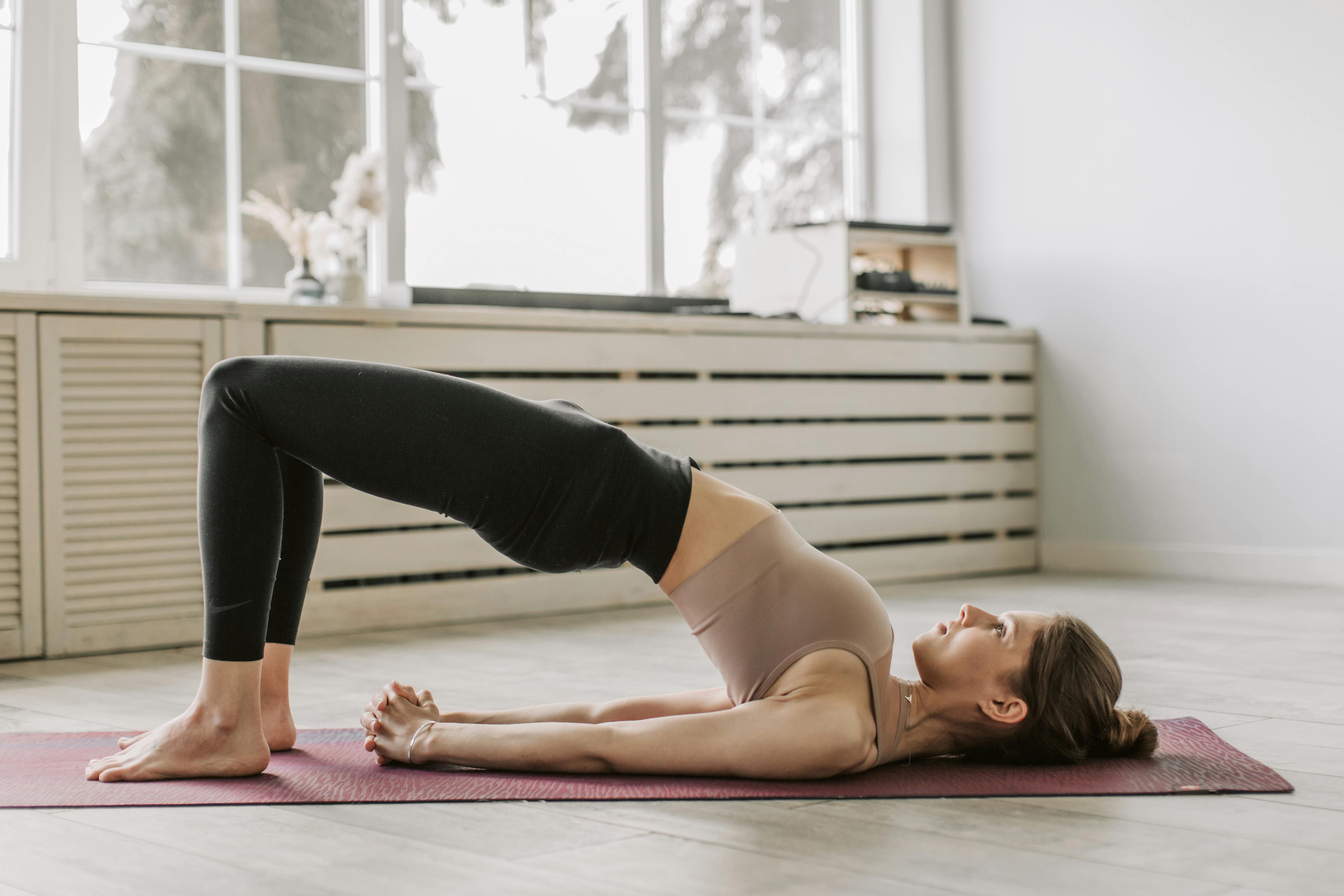
Glute Bridge
Builds posterior chain strength — gluteals and hamstrings — that protects the knee, hip, and lower back. Weak glutes are a contributing factor in ACL tears, IT band syndrome, patellofemoral pain, and hamstring strains. A foundation exercise for almost every lower limb sports injury.
Full Instructions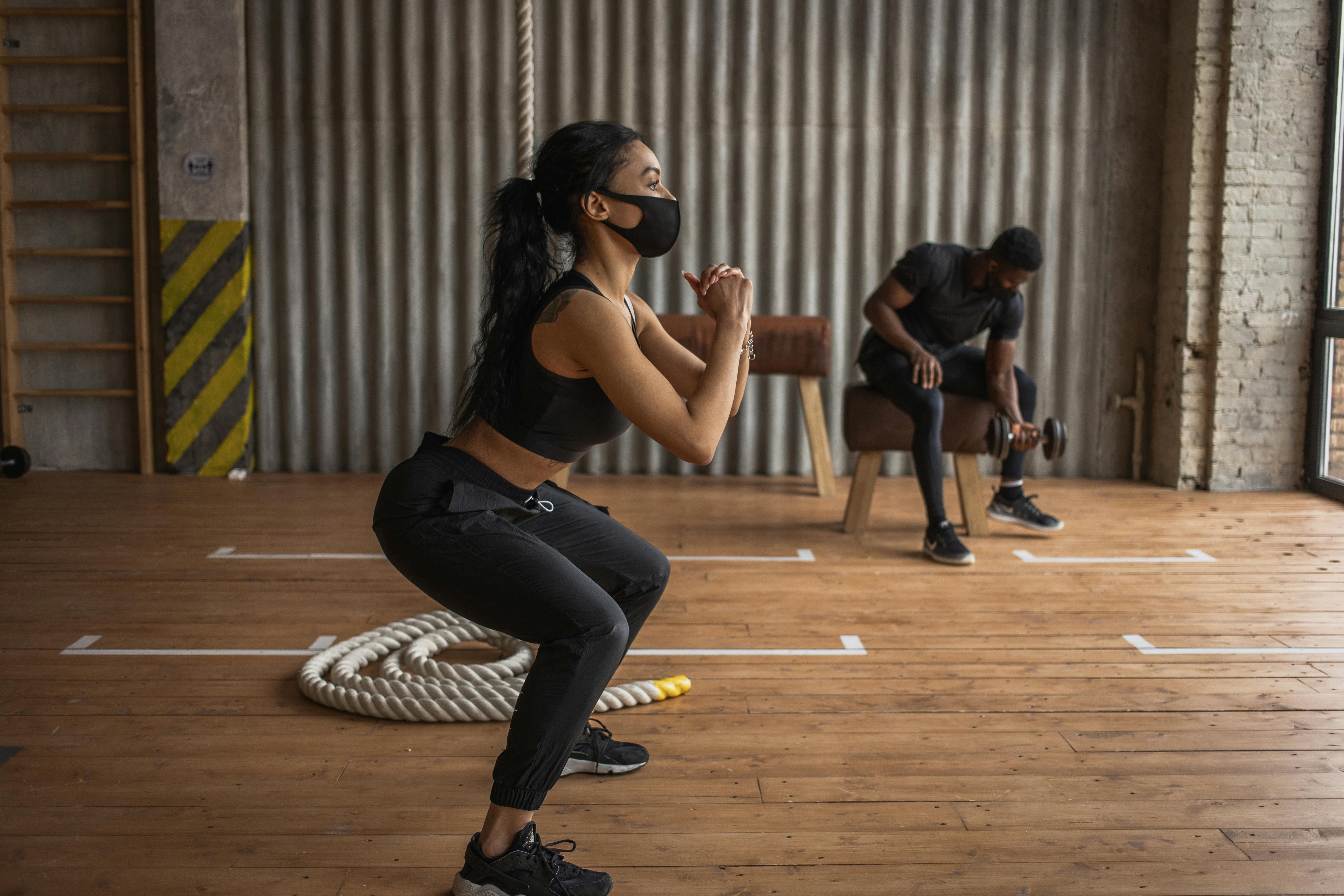
Controlled Squat
Rebuilds quadriceps, gluteal, and hamstring strength in the sport-relevant movement pattern. Controlled descent and ascent trains the neuromuscular control of landing — one of the most important injury prevention skills. Progress from bilateral to single-leg as strength improves.
Full Instructions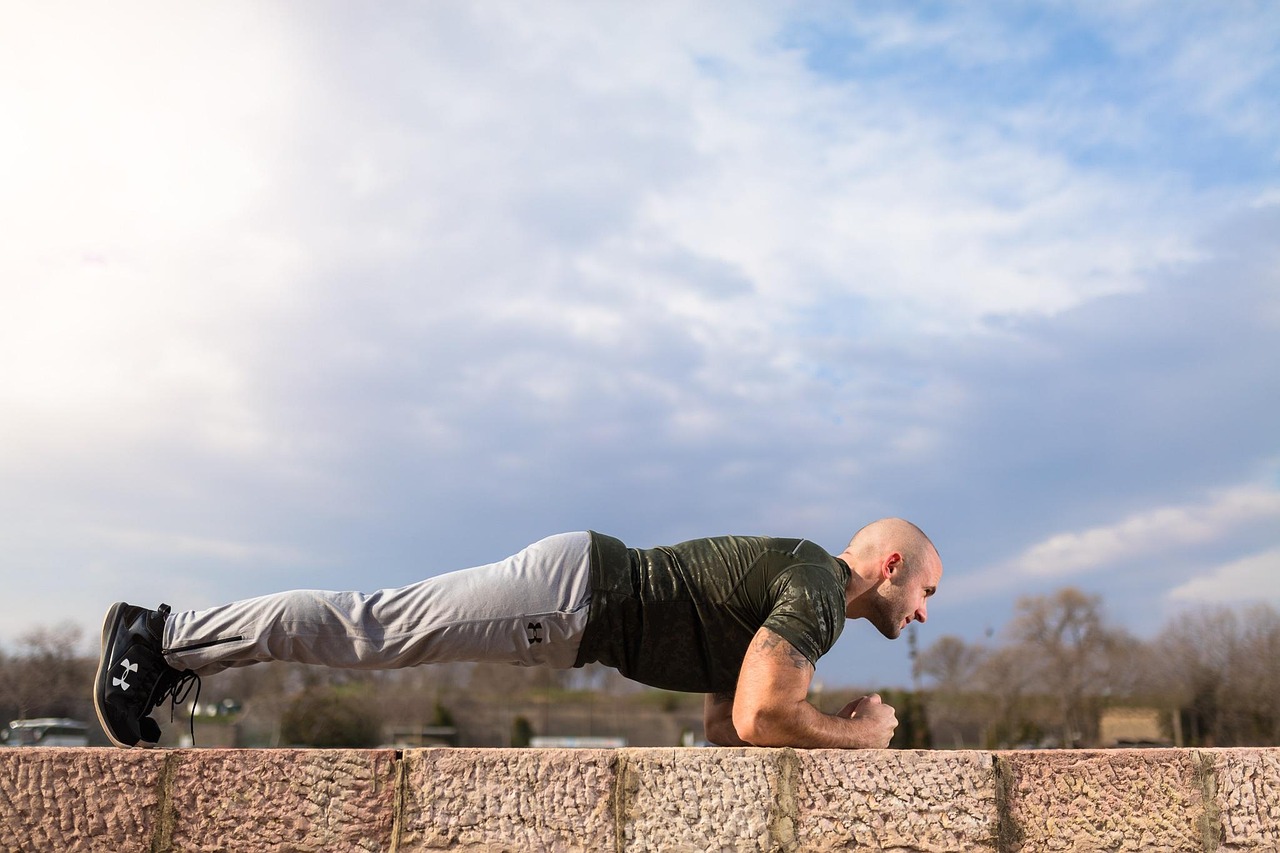
Plank
Core stability is the foundation of safe sporting movement. A strong, well-controlled core transfers force efficiently between the upper and lower body, reduces spinal loading, and improves the biomechanics of every athletic movement. Weakness here contributes to almost every sports injury.
Full InstructionsWhen to Seek Immediate Medical Care
Most sports injuries are best managed by a physiotherapist. But some situations require emergency or urgent medical assessment first.
Go to hospital or emergency care — not a physiotherapy clinic — if you have any of these
These signs suggest a fracture, dislocation, vascular injury, or other condition requiring imaging or surgical assessment before physiotherapy begins.
Ready to Get Back to Your Sport?
Don't let an injury sideline you longer than necessary — but don't rush back before you're genuinely ready either. Our certified physiotherapists in Luxor will assess your injury precisely, explain your realistic recovery timeline, and build a programme that gets you back to full performance safely. Evening appointments available every day except Sunday.